


Most teenagers probably aren’t thinking about saving for retirement, buying a home, or even paying for college when they start their first jobs.
Yet a first job can present an ideal opportunity to explain how a Roth IRA can become a valuable savings tool in the pursuit of future goals.
RULES OF THE ROTH
Minors can contribute to a Roth IRA as long as they have earned income and a parent (or other adult) opens a custodial account in the child’s name. Contributions to a Roth IRA are made on an after-tax basis, which means they can be withdrawn at any time, for any reason, free of taxes and penalties. Earnings grow tax-free, although nonqualified withdrawals of earnings are generally taxed as ordinary income and may incur a 10% early-withdrawal penalty.
A withdrawal is considered qualified if the account is held for at least five years and the distribution is made after age 59½, as a result of the account owner’s disability or death, or to purchase a first home (up to a $10,000 lifetime limit). Penalty-free early withdrawals can also be used to pay for qualified higher-education expenses; however, regular income taxes will apply.
In 2025, the Roth IRA contribution limit for those under age 50 is the lesser of $7,000 or 100% of earned income (unchanged from 2024). In other words, if a teenager earns $1,500 this year, his or her annual contribution limit would be $1,500. Other individuals may also contribute directly to a teen’s Roth IRA, but the total value of all contributions may not exceed the child’s annual earnings or $7,000 (in 2025), whichever is lower. (Note that contributions from others will count against the annual gift tax exclusion amount.)
 LESSONS FOR LIFE
Starting early can make an enormous difference. Even small contributions made as a teenager can grow significantly over time thanks to compounding. For instance, a $1,000 contribution at age 16 could grow to more than $10,000 by age 66, assuming a 7% annual return — without any additional deposits. This illustrates how time, consistency, and patience can turn modest savings into meaningful wealth. Teaching young earners to “pay themselves first” with even a small Roth IRA contribution helps build habits that can last a lifetime.
When you open a Roth IRA for a minor, you’re giving more than just an investment account; you’re offering an opportunity to learn about important concepts that could provide a lifetime of financial benefits. For example, you can help explain the different types of investments, the power of compounding, and the benefits of tax-deferred investing.
By helping a teen open a Roth IRA, you’re not just investing money — you’re investing in their confidence, independence, and future. The earlier they start, the more powerful every dollar — and every lesson — becomes. Giving a young person the tools to build their financial future may be one of the most enduring gifts a parent or grandparent can offer — one that will continue to grow long after the first paycheck is spent. The young people in your life will thank you — sooner or later.
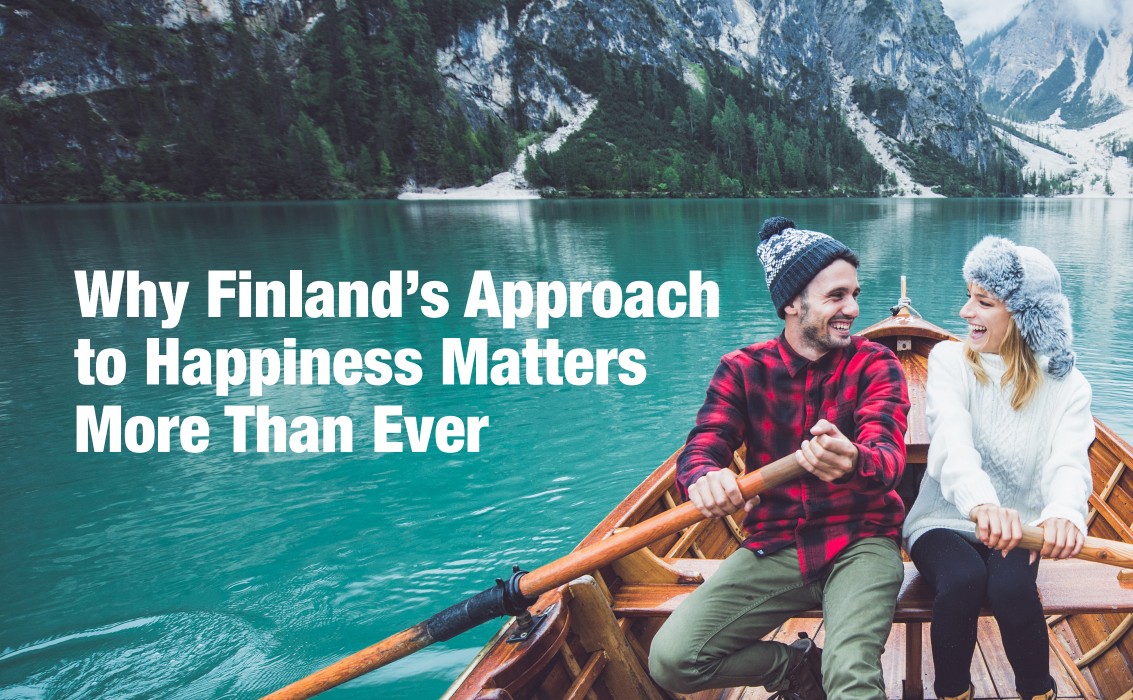
For the past eight years, Finland has topped the World Happiness Project Report, prompting the world to pause and ask why. The country is not driven by grand gestures or revolutionary programs. Instead, the Finnish approach to happiness comes from simple habits and shared values that place balance, trust, and well-being at the center of daily life.
For those of us who think about financial well-being and long-term planning, Finland offers a refreshing reminder. Happiness is not created by accumulating more. It grows when our choices, resources, and priorities line up with what genuinely matters.
WELL-BEING COMES FIRST
In Finland, well-being is not something people hope to squeeze into their schedules. It is built into the culture. People value rest, family time, time outdoors, and work that leaves room for a full life. Exhaustion is not a badge of honor, and productivity does not define anyone’s worth.
This mindset offers a contrast to the pace many people feel they need to keep. Finland shows that when balance becomes a norm rather than an afterthought, people feel more grounded and resilient.
A CULTURE BUILT ON TRUST
Another key ingredient in Finland’s happiness is trust. Citizens trust their institutions, their communities, and even strangers. This creates stability and reduces the daily stress that comes from uncertainty.
The idea translates well to financial planning. Good decisions are easier when trust is strong and information is clear. With trust, people can focus on progress rather than fear.
NATURE PLAYS A CENTRAL ROLE
Nature is not something Finns save for weekends or vacations. Walks in the forest, time by the water, and seasonal traditions are part of everyday life. The outdoors provides calm, perspective, and a break from the constant noise of modern living.
THINKING BEYOND TODAY
Finland is known for long-term thinking. The country invests in education, sustainability, and policies that benefit future generations. This mirrors the mindset behind strong financial planning, where patience and intention shape long-term success.
FINDING JOY IN ENOUGH
Finnish life embraces simplicity. Quiet routines, modest expectations, and appreciation for small moments help create steady contentment. Finland offers a valuable reminder that clarity and peace often come from valuing what we already have rather than chasing more.